
Mini and Compact E-Bikes for Last-Mile Delivery Fleets
When compact e-bikes beat cargo platforms for urban delivery, the specs that matter for fleets, and the KOOLUX X9 Mini and RK10 line-up.
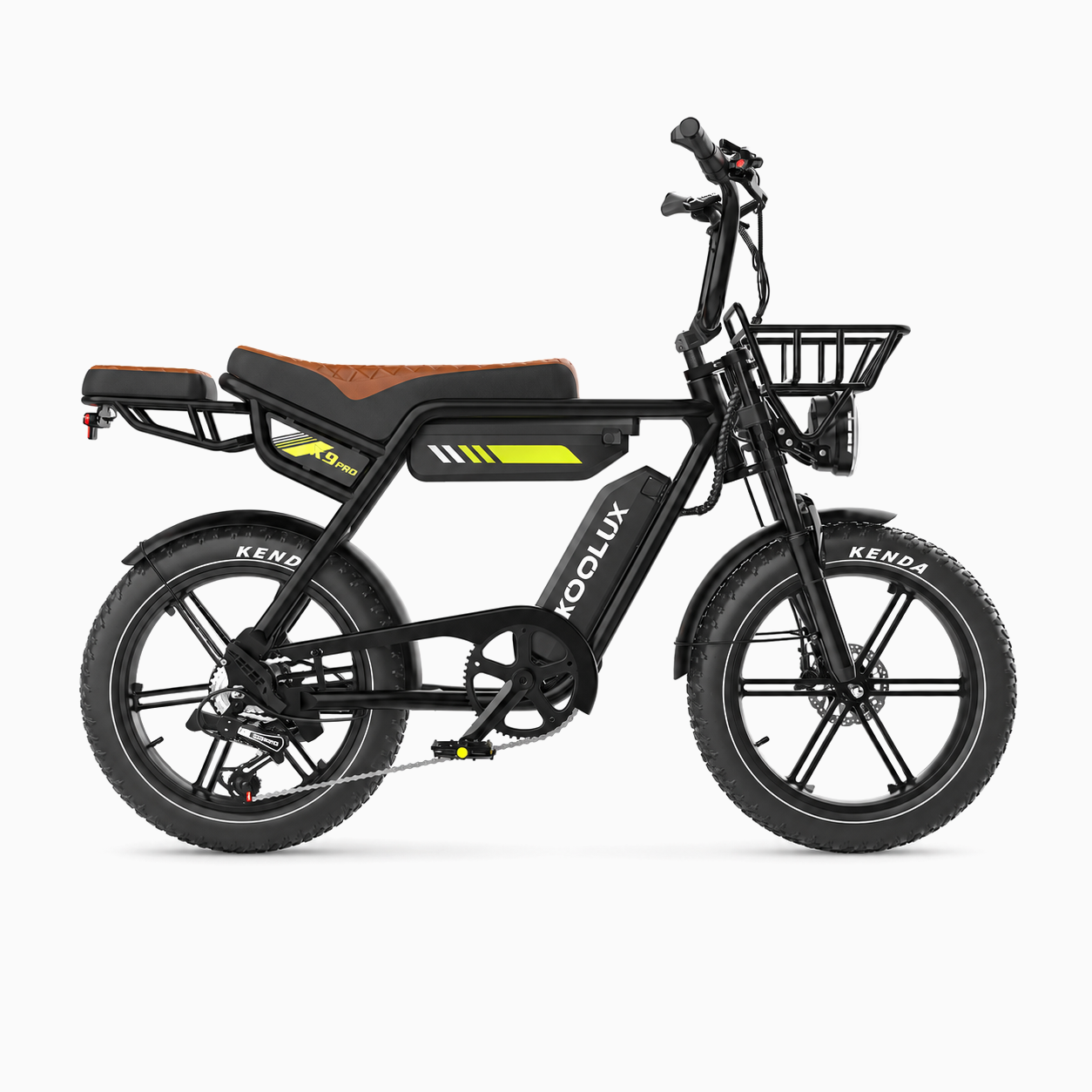
The last mile is the expensive mile — and it is also the mile where big vans are least efficient. Mini and compact e-bikes have become the default answer for dense urban delivery, campus logistics and quick-commerce operators. Here is what makes them work and which models fit.
Why compact beats cargo for dense routes
Cargo e-bikes carry more per trip, but compact e-bikes carry enough for most urban drops — and they outperform in three ways:
- Manoeuvrability — 12–20 inch wheels thread pedestrian zones, alleys and building entrances.
- Storage — a fleet of compacts fits in a single van bay or micro-hub.
- Cost — roughly half the price of cargo platforms, both capital and per-unit maintenance.
Specs that matter for fleet use
- Battery: 48V with realistic 60+ km range, or dual-pack for full shifts.
- Load: 120 kg+ total capacity with a sturdy rack or basket mount.
- Brakes: disc minimum; hydraulic for hilly cities.
- Serviceability: standard parts — controllers, displays, throttles — available off the shelf.
The KOOLUX compact line-up
The KOOLUX X9 Mini and RK10 are built around exactly this brief: moped-style ergonomics that stay comfortable through a full shift, 48V platforms, and compact footprints that park anywhere. For heavier routes, the X8 bridges into cargo territory with basket and rack capacity.
Fleet deployment notes
- Standardise on one compact model — mixed fleets multiply spare-parts inventories.
- Buy batteries as consumables: plan a swap cycle every 18–24 months of intensive use.
- Equip riders with a daily 60-second checklist: tyre pressure, brake feel, latch security.
Compact fleets pay back fastest in quick-commerce and food delivery, where stop density is high and speed per stop matters more than load per trip. Ask KOOLUX about fleet pricing and EU-local availability.
